



Most portfolios stall at the same point: the beginning. There is work worth showing, somewhere on a hard drive, but it feels scattered, unfinished, or not quite good enough to put your name to. So the folder stays closed and the site stays unbuilt, sometimes for years.
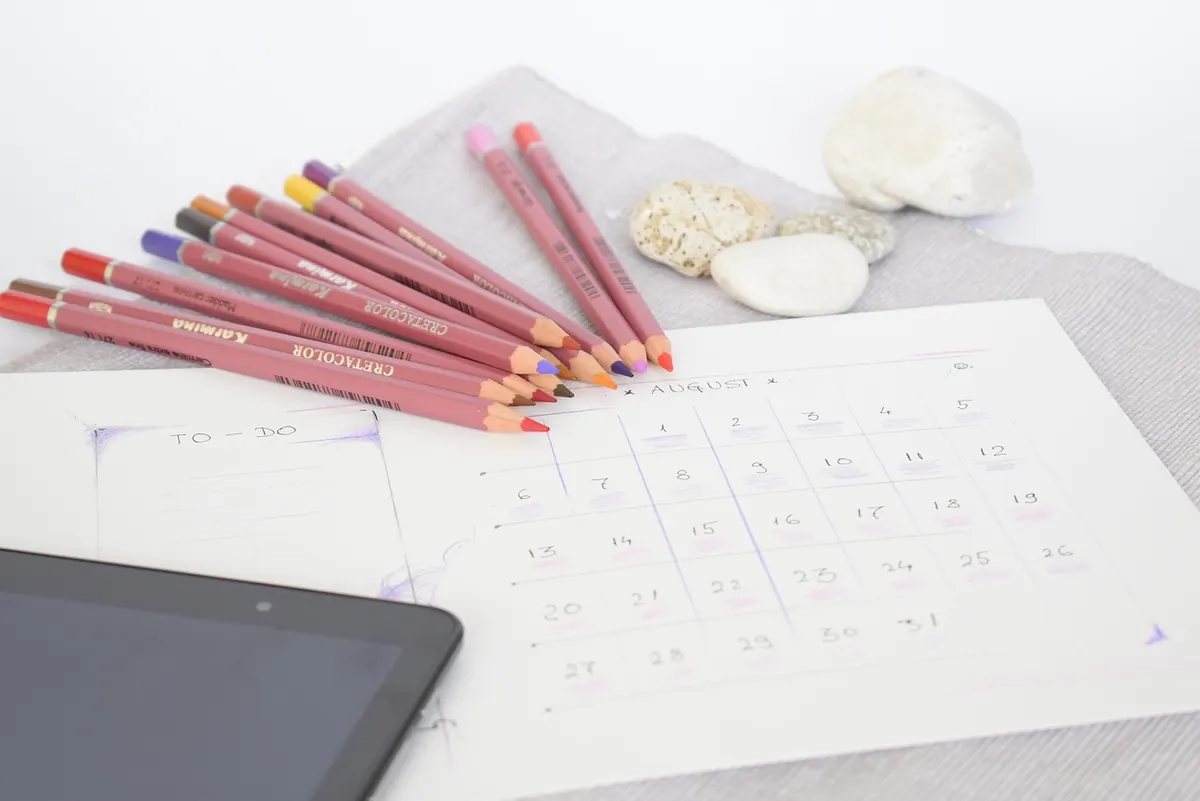
Thirty days is enough to change that, if you treat it as a series of small decisions rather than one enormous project. An hour a day, give or take. Some sessions you will spend the whole time choosing three images. Others you will write four sentences and stop. That is the plan working, not the plan failing.
Days 1 to 5: gather everything, then choose
Create a folder called Everything and fill it without judging. Client work, student projects, that poster you made for a friend's gig, photographs, sketches, spreadsheets, code — whatever your discipline produces. The point is to see the whole picture before you start cutting.
Then make a second folder, Maybe, and move across anything you would be happy to talk about for ten minutes. Ask of each piece:
- Does it show the kind of work I want to be asked for next?
- Can I explain the decisions I made, not just the outcome?
- Does it hold up beside my strongest piece?
- Would I be glad, rather than nervous, if someone asked about it?
Anything that fails two of those questions goes back into Everything. Aim to finish the week with eight to twelve pieces. That range is deliberate: fewer looks thin, more looks unfocused and becomes a chore to maintain. If you have nothing but student work, that is fine. Student work with a clear explanation beats professional work you cannot describe.
Days 6 to 12: write the case studies
Write the words before you touch the design. Case studies do the selling; the images only support them. Keep each one between 200 and 400 words and give it the same shape:
- The situation: who it was for and what was at stake.
- The constraint: budget, deadline, technical limit, an awkward brief.
- What you did: the decisions, in order, in the first person.
- The result: what changed, and how you know.
- What you would do differently: one honest line.
Here is the shape of a decent opening:
A small bakery needed to take celebration cake orders without hiring someone to answer the phone. I designed a four-page site and a simple order form, working to a fixed budget and a two-week deadline before Christmas.
Notice how concrete it is. No adjectives doing the heavy lifting, no claims about "innovative solutions". Write your first drafts quickly and badly; you will edit them next week with a clearer head. Read each one aloud when it is finished — any sentence you stumble over is a sentence to rewrite.
If a project is confidential, write an abstract instead: the problem in general terms, your role, and what you can show. A short honest page beats a blank one with an apology on it.
Days 13 to 17: edit hard, then write about yourself
This is the week to be ruthless. Cut the weakest three pieces, even if you spent months on them. Reorder so your best work sits first and second, because most visitors will not scroll far past the first screen. Crop and resize your images so they share a similar proportion, and compress them. A portfolio of twenty full-resolution photographs will test the patience of anyone opening it on a train.
Give the same attention to your About page, usually the second page people read. Keep it to about 150 words, written in the first person and the present tense. Cover three things: what you do, how you work, and what you would like to do next. Put your email address here as text as well as a link, so it survives being copied and pasted.
Days 18 to 24: build something deliberately simple
You need four pages and an obvious way to reach them:
- Home — a sentence about what you do, plus two or three pieces.
- Work — an index of everything, each item linking to its case study.
- About — your short biography and contact details.
- Contact — a form or an email link, whichever you will actually answer.
Whether you hand-code the site, adapt a template, or use a portfolio-focused platform matters far less than finishing. Pick one on day 18 and commit to it. If you are building it yourself, keep the typefaces to two and the colours to three, and check every page on a phone before you check it anywhere else. Add alternative text to images, make sure links and buttons show a visible focus state, and keep body text large enough to read without zooming.
Then stop designing. The temptation in week four is to rebuild the whole thing "properly". A finished site you can improve later is worth more than a beautiful one that never launches.
Days 25 to 30: test, polish, launch
Send the site to two people whose judgement you trust and ask one question: what do you think I do? If their answer does not match your intention, fix the home page rather than adding more work. Then run a short checklist of your own:
- Spell every client name correctly, including accents and ampersands.
- Click every link, on a desktop and on a phone.
- Check that no image is stretched, blurry or missing.
- Send yourself a message through the contact form or email link.
- Read the whole site once, slowly, out loud.
Launch on day 29 or 30, regardless of how you feel about it. A portfolio is never finished, and the version you publish will teach you more in a fortnight than another month of tinkering. Once it is live, send three short, specific emails to people who might have work for you. Link to one project, say why you are writing to them, and stop typing.
After day 30: a portfolio is a habit, not an artefact
Book one hour a month to add a project, retire a weak one, and check that your contact details still work. Every three months, read the site as a stranger would and delete anything that no longer represents the work you want next. The strongest portfolios are updated quietly, on an ordinary Tuesday, with no grand relaunch at all.
Photo: marijana1 / Pixabay
Related posts
More stories you’ll love reading